Sunday, October 21, 2012

Maasai


The villages I’ve been in over the past few weeks are predominately Maasai. Maasai is a tribe with a large presence in and around the Arusha area of Tanzania. Out of all the tribes here, I find Maasai the most interesting, partly because their culture is so different from mine.


Their livelihood revolves around their cows. They value their cows very highly not because they worship them but because of the milk, manure, and meat that they produce. Wealth is measured in cows: the more cows one has, the more prestige that person holds in the community. Even brides wealth is paid in cows!


Coming of age is a very important part in a Maasai man’s life and involves several steps. As explained to me by our Maasai intern Hagael, first the boy (who may be between the ages of approx. 14-18) must ask his father for permission to be circumcised. If permission is granted, he must then prove his strength by catching a bull and tying its legs together. After this, the boy must go to his grandfather for his blessing, and then he can be circumcised. The circumcision is done using no anesthetics, but if the boy cries or shows signs of weakness during the ceremony he brings great shame upon himself and his family. I cringe every time I see a Maasai boy all in black, because his clothing indicates that he has recently been circumcised and is still healing.


Although I have yet to experience it (since our trainees are generally hard-working), I have heard that Maasai men are very lazy and that their only daily task is to take the cows in at night. Women do the cooking, cleaning, child-rearing; they fetch the water, gather firewood, and of course cater to their husband’s every need. It’s not uncommon for the lucky man to have several wives to do this work for him, although I’m told that polygamy is becoming less prevalent in Maasai culture.


Due to their value of cows, a meal of milk and beef is often considered a good Maasai dinner. Unfortunately there is a belief in Maasai culture that fruits are for children and the weak/ill, so they are not consumed as commonly as they should be, contributing to malnutrition. Also, in general Maasai just don’t like vegetables (the Maasai word for green veggies like lettuce and spinach actually translates to “grasses”) so they are lacking in that food group as well.


The Maasai wardrobe is very interesting. The men wear “Maasai blankets” which are rectangular pieces of red, blue, or purple plaid cloth. They generally wrap one around the waist and one around the chest, and sometimes wear a third one like a cape. The women may also have a Maasai blanket handy to carry their babies on their backs. Most women wear a khanga wrap and lots of elaborate bead jewelry. Both men and women have stretched earlobes with large holes through them… I must admit it was hard not to stare during the first week I worked with them (even though I get stared at whenever I’m in public).


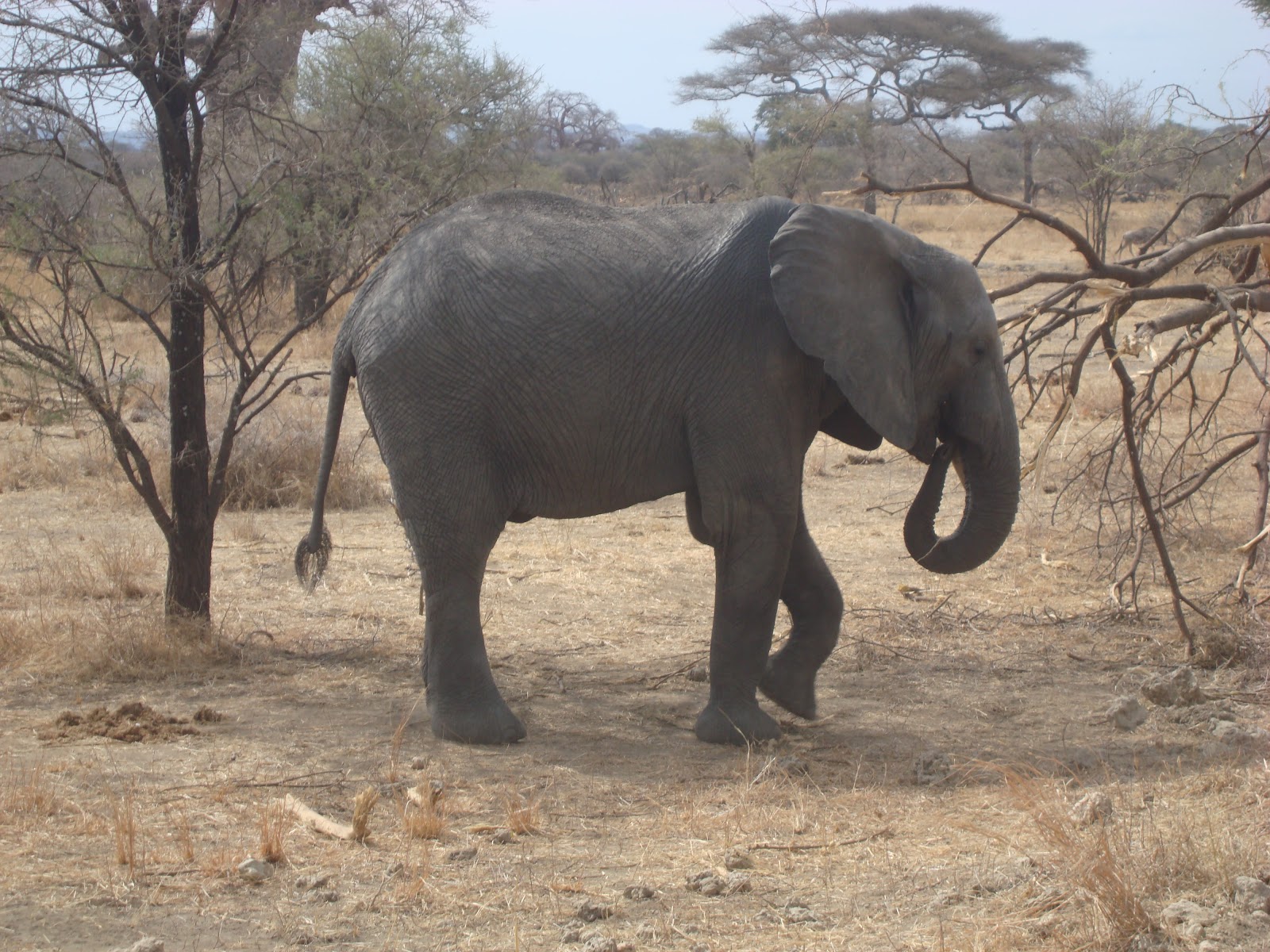
As for my vacation week, it was absolutely fantastic. Actually it couldn’t have been better. I got to hang out with my Dad last weekend! It was soooo nice to get to show him around my temporary home. We took a long tour of downtown Arusha on foot looking for soccer balls. My Dad made it a mission to buy soccer balls for a school down the road because he had seen the kids playing soccer with a bundle of rags during recess. The mission was accomplished! We also went on a safari, which even Dad appreciated despite his dislike of animals!
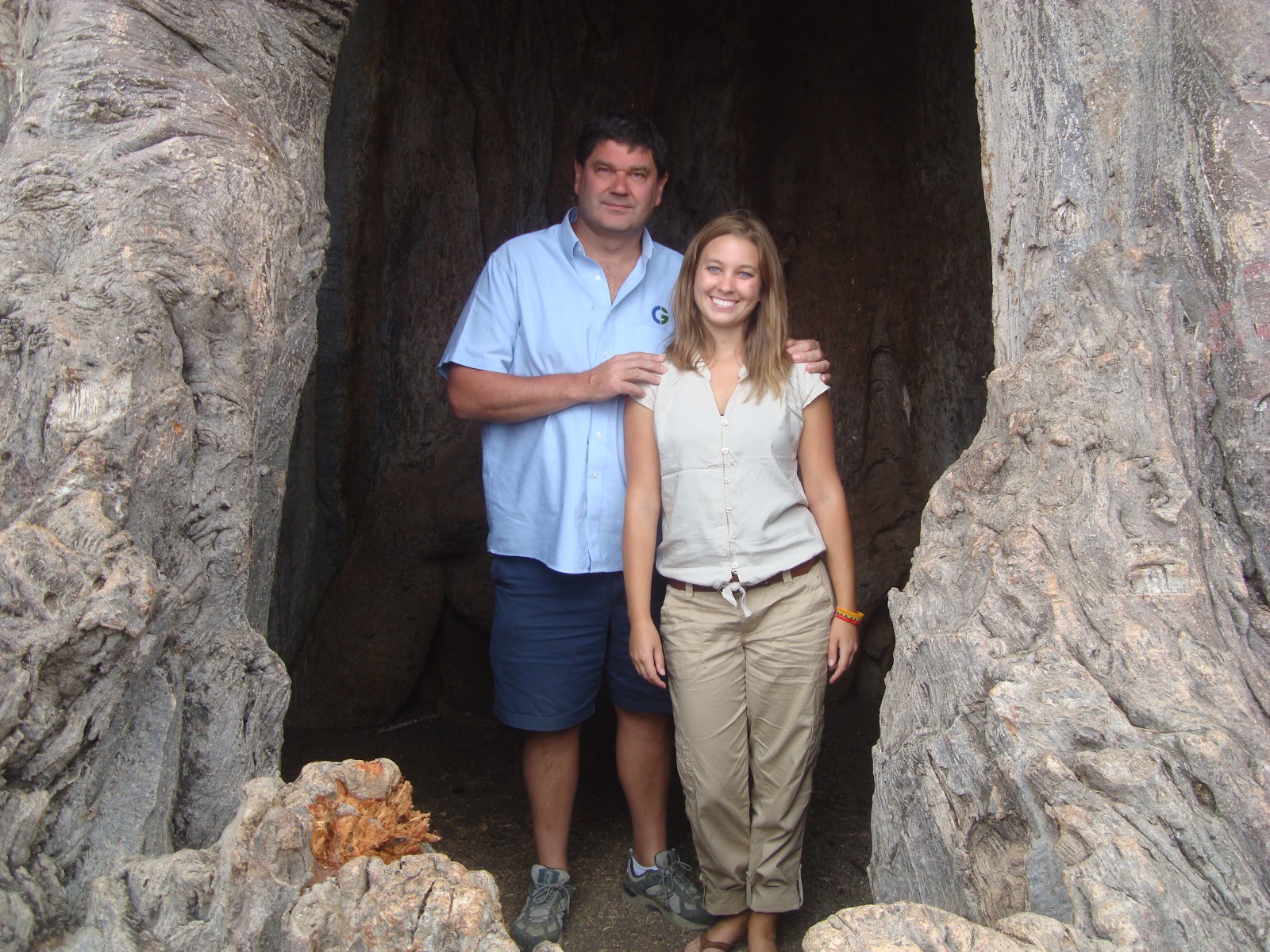
 

I don’t think I have to even tell you that Zanzibar was amazing. I’m not even ashamed to say that I spent all my time by the pool and on the beach (and not doing any kind of work whatsoever) because you would’ve done the same!! The scenery was breathtaking and the weather was perfect all week. It was really hard to come back home!


This week I’ll be in Arusha finishing up my last week of sustainable agriculture training, then I’ll be starting HIV/AIDS trainings!

Sunday, October 7, 2012

"Vijijini" (In the Villages)


Hamjambo!! Hello everyone! Over the past two weeks I visited two rural Tanzanian villages with GSC: Maroroni and Tingatinga.

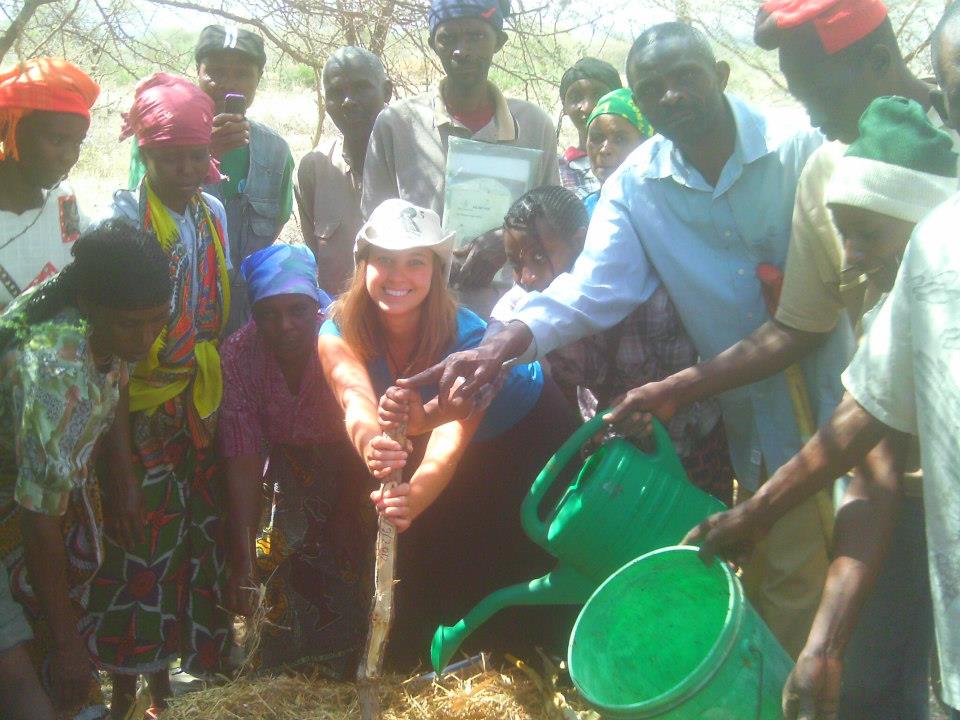
During my first week of field work, we camped out in Maroroni village (about an hour’s drive from Arusha). We brought buckets of our own clean drinking water, we heated up water for our bucket-baths using a good old-fashioned fire, and there was a pit latrine located conveniently in the center of our campsite. Breakfast, lunch, and dinner were made for us by a local, Leonardi, but they were made on a Tanzanian time schedule (one day dinner for 7pm was ready at 9pm). There’s not much to Maroroni. It’s extremely dry, there are chickens and donkeys roaming around everywhere, no electricity, and lots of school children who are fascinated by wazungu but too afraid to talk to us. The village people were mostly very welcoming, especially our trainees. Each day, me and the other trainers taught groups of villagers about bio-intensive agriculture (kilimo hai in Swahili). Kilimo hai is “a method of organic farming rooted in maintaining soil fertility and living soil.” We teach in English and everything we say is translated for the villagers by our Tanzanian interns into Swahili. The first couple days we just lecture, but the rest of the week we demonstrate kilimo hai through practicals. Our first group was extremely attentive, and it was really cool working side-by-side with the locals!
 

We were in Tingatinga, a Maasai village, for my second week of field work. This was my home during my stay: 
 

The scenery was much nicer than in Maroroni (which was like barren savannah). Tingatinga actually has green plants, and you can see Kilimanjaro from almost anywhere in the village!


A lot of the little kids here were excited to see wazungu and not too shy to talk to us, but I did run into one little girl who cried when she saw us because she was scared of wazungu. However we did make some friends in Tingatinga. We became quite close with two little kids, Everest and Kesia (right).
 
On another note, unfortunately we didn’t have any trainees this week. We had almost 50 people registered for our trainings but only a couple showed up. We were told that this happened because the villagers don’t want to come unless they get paid for it (some organizations do offer money for people to come to their trainings, but not GSC). But I don’t even want to teach people who just come for money! In order for what we teach to actually make a difference, we need people who are actually interested in learning about kilimo hai so that they will use it when we leave. Anyway, we had to cancel the trainings and we made some keyhole gardens and grain storage tanks for a few villagers instead.


This Friday was both Sarah’s and Ayo’s birthday, so of course we went out to celebrate!! -->


After a fun night at the Babylon Club, Saturday we went on a hike up Mt. Meru to the waterfalls with Luke’s host-brother, Hans, as our guide. The whole climb was absolutely gorgeous, and I finally got to see the tropical side of Africa!


Lots of exciting things to come!! This week I’ll be teaching kilimo hai in a new village, I get to hang out with my dad next weekend, and then I’m off to Zanzibar! NBD.
 

Saturday, September 22, 2012

Comparisons


Over the past few weeks I have been reading World without End by Ken Follett. It is a historical fiction that takes place in medieval times, and as I have read it I have come across several similarities between medieval England and present-day Tanzania:

·    Male domination. In 14th century England, the man’s role was to provide income and to make all family decisions. The woman’s role was to raise children, cook, clean, and obey her husband (e.g. the women got the short end of the stick). Today, Tanzania is no different. It is rare to find an independent woman here and even rarer to find a man who will cook or clean. It is frowned upon by all members of society for a man to do domestic chores because it takes away from his masculinity. Men have control over all money matters, even if his wife produces her own income by selling crops. If she needs money to buy groceries, she must ask her husband to give it to her. There are also no female doctors here, which is interesting because one of the main characters in World without End is a female who aspires to be a doctor, but can’t because society won’t allow it.

·    Medical care provided by churches. Medieval churches served as hospitals for the sick and injured, and the “doctors” were priests and priors who, despite their training, had no understanding of the human body. For example, blood-letting and purging were used for decades before people realized these “treatments” only worsened conditions. Of course Tanzanian doctors don’t do these kinds of things, but most hospitals here are sponsored by churches. However, it is not uncommon for a Tanzanian doctor to refuse to tell a patient their diagnosis if it is a bad one. For example, here is a story I actually heard from an HIV+ woman: she went to the clinic to get tested for HIV because she had suspicions that she had contracted the disease. The first doctor she went to refused to test her because he didn’t want to break the bad news to her if she tested positive. She convinced the next doctor she saw to test her, but he only agreed because she claimed she would not ask him for the results. She returned to his office the day after her test and asked him for the results, and he refused to tell her her status. Although he would not tell her, she said, “I already know I have HIV,” and he said, “How do you know?” She replied, “I can see it in your eyes.” She was right. However, that was years ago and today this woman, Mama Betty, is living healthy and positively despite her HIV.

·    Modes of disease transmittance. Just like people believed the European black plague was transmitted through looking at someone who was infected, this is a myth about HIV transmittance in Tanzania as well. It is one of several in fact. Another myth is that it is spread through witchcraft, another common belief between Tanzania and medieval England. Witchcraft is believed to be at the root of many problems here, and I have even met Tanzanians with college educations who believe that witchcraft is real. I have also been informed that (just like in medieval times) “witches/wizards” may be hunted down and killed so they will stop casting spells (like the HIV spell?).

·    Illegal homosexuality. Not surprisingly, homosexuality was illegal in medieval England (although it was common among monks and nuns, according to Follett) and is illegal in Tanzania. The reason this does not surprise me is because, unfortunately, 50% of the population (women) still don’t have the rights they deserve, so it seems highly unlikely that a much smaller population of people who may be viewed as “unnatural” would have the rights they deserve. People here LOVE Obama. I have to wonder, do they love him because he’s black? or because of his support of gay marriage?

These are simply observations. I am not making any implications, although it does seem that some of these cultural ideals may serve as barriers for development.


Next week, I’m off to teach bio-intensive agriculture in the villages! (Bet you didn’t know I know how to farm! It’s amazing what you can learn in a few weeks…)

Saturday, September 15, 2012

"Safari" (Journey)


Last Saturday I went on a safari in Terengire National Park! I saw lots of elephants, zebras, wildebeest, impalas and warthogs, some lions, waterbucks, hornbills, ostriches, striped mongooses and monkeys, a couple of giraffes, a buffalo, and a cheetah. It was quite the African experience… it was like stepping into The Lion King!


I am adapting to Tanzanian life well, but Tanzanians will never adapt to me. Here I am known to the locals as “mzungu,” white person. Lots of people stare at our group of wazungu (+ Ayo!) walking around town, some people say hi as they pass, some target us as wealthy tourists/potential buyers, and some Tanzanians are so friendly that they approach us just to talk about where we’re from and what brings us to Arusha. The best part is the little kids who get so excited to see white people. They put on a huge smile and shout, “Wazungu! Wazungu!” Sometimes they even reach out to touch us as we walk by! ADORABLE! The other day a little girl said “Hello!” and grabbed my hand and started walking with me. My friend Sarah asked her, “Jina lako ni nani?” (What is your name) and she replied, in perfect English, “My name is Jackie.” haha! Kids in Tanzania start learning English in kindergarten, and by the time they enter high school their classes are all taught in English. That’s why my host sisters speak English so well!
 
 
The Tanzanian men are quite happy to see mzungu girls too, several have confessed their love for me and I even received a proposal from my taxi driver! I find the best response is, “I’m already married.”

A typical day here starts at my homestay, when I wake up to my host Mama saying, “Karibu Jenni, breakfast!” (Welcome to breakfast). So I eat my giant breakfast and get ready for the day, then start walking to meet the other students. Ayo lives a couple of houses down from me, but we live the farthest away. Then we meet Allie, Luke, and Sarah during the next 20 minutes of walking. Sometimes we take the dala dala from there to class, but we often walk another 30 minutes to class. Class varies every day, but usually starts with 2 hours of Swahili with my mwalimu wa Kiswahili (Swahili teacher) Godson. He’s very energetic, a great way to start the day! The rest of the day we have lectures on HIV, nutrition, sustainable agriculture, development, or we do a farming practical outside in the demo plots. So far, we’ve made a sack garden (literally a garden coming out of a sack), a compost pile, and a double dug bed. They involve a lot of manual labor, luckily the men of the group are eager to step in. Class ends around 5pm and we often walk from there to a nearby hotel to use the internet and grab a drink. From there I head home, have dinner, take my bucket bath when my maji moto (hot water) is ready, do some work (sometimes), and go to sleep! And that’s a day in the life of an African adventure!!

PS – Whoever said Africa is hot LIED! Arusha is quite cool, and I definitely did not pack enough sweatshirts and jackets. Oops!

Friday, September 7, 2012

"Karibu Arusha!" (Welcome to Arusha!)


Jambo from Tanzania!! This is the first time I’ve had a chance to post a blog this week because I don’t usually have access to internet, but I’m adapting well to life here in Africa! Let me give you a rundown on what things are like here:

Accommodation
I am currently living with my host family, which consists of my Mama Mary and Baba (father) and their three daughters: Eva (20), Rachel (17), and Dorcais (14). The girls speak great English, and they find it hilarious when I try to practice my Swahili with them! They also have lots of other family members who come around often. The house is simple but very nice, and it does have running water and electricity but the electricity goes out frequently. They treat me like a queen! I have my own room with a king-sized bed and they feed me VERY well…

Food
They make me a HUGE breakfast every morning (omelet, bread and peanut butter, tea, banana, oranges, all just for me!), and I have dinner every night with the girls. Dinner here doesn’t vary too much, it normally consists of rice or pasta with beans or a sauce with meat. They also serve fruit for dessert… no real desserts here!! I might lose 15 pounds!

Toilets
The GSC office and hotels have toilets like in America (although the flusher doesn’t always work…) but most homes, including mine, have toilets in the floor. It flushes, but there’s nothing to sit on! Yikes!

Bathing
As I said, my home has running water, but it has no hot running water. So instead of taking a cold shower (which would not be enjoyable because it is quite cool here) I take bucket-baths. My family provides me with a bucket of hot water to bathe myself in, perfect! Right? I gave up on using conditioner.

Transportation
To get from my home to the office, first I have to walk about 10 minutes to the “dala dala” stop. The dala dala is like a taxi van that can hold 17 people, but they stuff about 25 people into it. It’s very crowded, but very cheap! Guess how much it costs in total for me and the other four students to ride? A dala dala bill!! One dollar! hahaha I know everyone misses my word-play.

 
I’m going on my first Safari tomorrow, so I will update my blog soon! Kwaheri!

Thursday, August 23, 2012

"Kwaheri Amerika, Hujambo Tanzania!" (Goodbye America, Hello Tanzania!)

I can't believe that in a week I will be departing for Tanzania. I've been too excited to feel nervous, and I think that because so many people are nervous for me, I don't even have to be! You know what they say, Hakuna matata!

I've spent the past few weeks buying important supplies for my journey such as bug spray, malaria pills, Swahili phrase book, appropriate clothing (which does not include shorts or sleeveless shirts), and cleansing wipes (for days when bucket baths are not convenient). Unfortunately there are some things I have yet to do before I leave, like packing and learning Swahili!

For those of you who don't know, one of my goals for this trip is to collect information for my UAlbany thesis. My project will highlite the relationship between malnutrition and HIV, a complex issue affecting much of the African continent. Through researching this topic in Arusha, I hope to provide evidence that improved nutrition has decreased HIV mortality rates. The idea behind this hypothesis is pretty simple: Improved nutrition boosts immune systems of all people, including PLWHA (People Living With HIV/AIDS), thereby decreasing their chances of dying from disease! In an area where drugs for HIV aren't widely available, good nutrition is the best defense against the virus.

I also want to answer some of the questions I've heard a lot of lately:
1. I'm staying with a host family during my time in Tanzania, and I am guaranteed a room with a lock on the door and a mosquito net. I will probably have electricity and running water, but I won't be sure until I get there!
2. The chances of me getting jumped/kidnapped are (scarily enough) probably higher living in Albany than in Arusha. There is no civil war going on, and thousands of tourists travel there each year and return with no illness or injury. I've been vaccinated for yellow fever, immunized against typhoid, and will be taking anti-malarial pills for the duration of my trip, so I'm good to go!
3. The best way to keep in touch is online!

I probably won't post again before I leave, so Kwaheri Amerika, Hujambo Tanzania!

Tuesday, June 5, 2012

Global Service Corps


Global Service Corps (GSC) is a non-profit organization providing service-learning opportunities in Thailand, Cambodia, and Tanzania. This fall, I am participating in GSC's integrated HIV/AIDS and food security community development program in Arusha, Tanzania.

Arusha is a rural city located in northern
Tanzania at the base of Mt. Kilimanjaro

The goals of the program are to educate local community members in HIV/AIDS and sustainable agriculture while expanding my knowledge of solutions for battling the HIV epidemic and food crisis (which plague most of Africa).

I will spend the first three weeks of the 15-week program going through orientation, attending class lectures on African culture, public health, and community development, and doing some field work training. During weeks 4 through 12 I will be speaking about HIV prevention and sustainable agriculture in the community, and the last three weeks are dedicated to the "Serivce Learning Capstone Course."


I know it's still a few months away, but I'm SO EXCITED!